

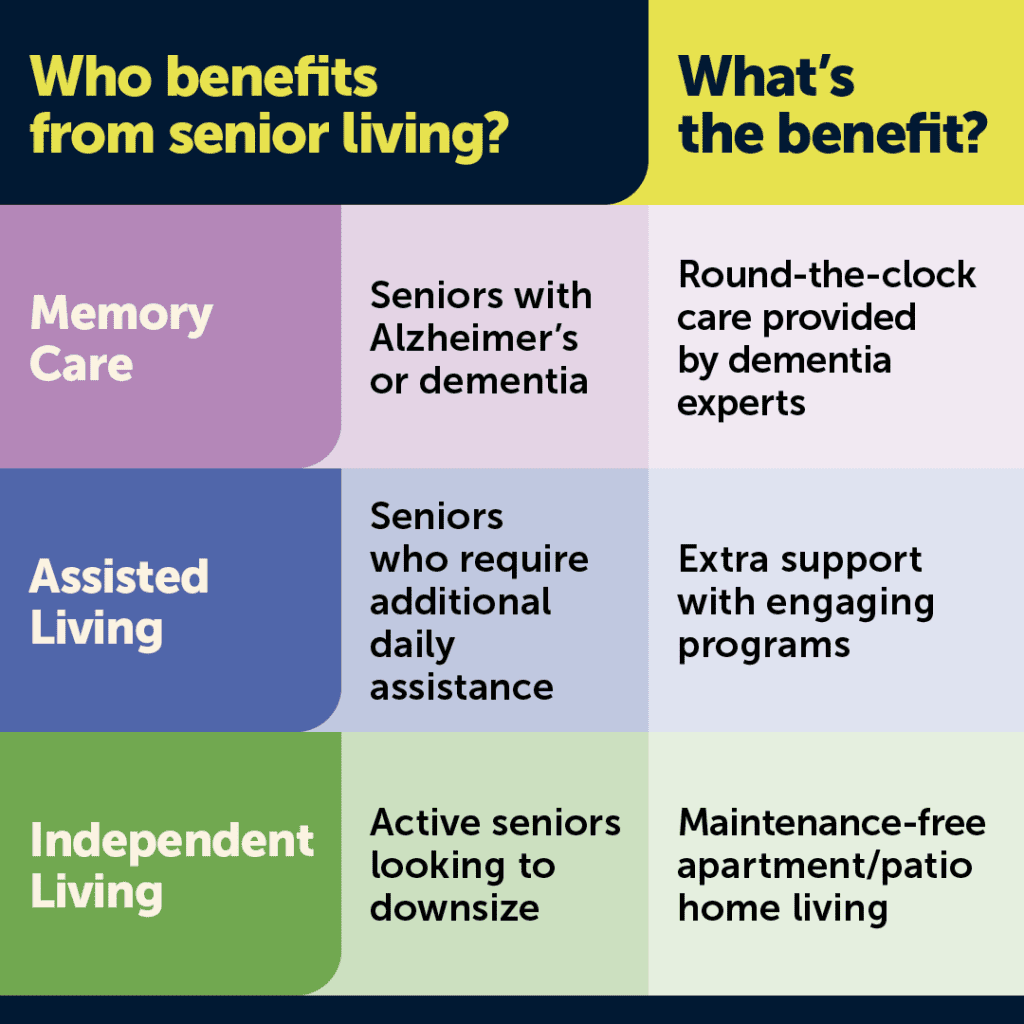
At Trilogy, we often hear families ask, “What is the real value of memory care?” The answer is simple, but powerful: Memory care is about helping people living with dementia continue to feel connected, useful, and confident every day. Memory care isn’t just a collection of tailored apartments. It’s a philosophy of support that builds on what remains strong in the brain, honors a person’s life story, and creates meaningful daily moments.
Memory care builds on retained abilities.
People living with dementia still have many abilities that remain strong. A quality memory care program is designed to use these retained abilities to support daily life. Instead of focusing only on what has changed, teams create opportunities for residents to succeed, contribute, and feel confident.
This might look like:
- Helping a former cook stir soup or cut up the vegetables in the kitchen
- Playing familiar hymns for someone who loved church music
- Inviting a teacher to help read stories to others
- Encouraging a gardener to water plants
These moments help people stay connected to who they are.
Memory care creates predictable, daily routines.
The brain feels more comfortable when life is predictable. Consistent routines help reduce confusion and make daily activities easier. Memory care teams create daily schedules around each person’s preferences, habits, and life story—meals at familiar times, favorite music in the morning, quiet rest after lunch, evening walks, or art projects inspired by lifelong interests.
These routines help residents feel oriented, comfortable, and confident.
Memory care honors identity through life stories.
Every person has a story. Memory care uses those stories to understand roles, hobbies, culture, and relationships that shaped someone’s life. When teams know a person’s story, care becomes connection. Instead of simply helping with dressing, staff may say:
“Let’s get ready for choir practice.”
Instead of serving lunch, they might invite someone to help set the table as they did for their family for years. This approach preserves dignity and meaning.
Memory care supports families.
Families often carry love, worry, and exhaustion at the same time. Memory care communities provide partnership, education, and reassurance.
Loved ones struggling with uncertainty gain:
- Guidance from dementia-trained teams
- Relief from 24-hour caregiving demands
- Confidence that their loved one is engaged and supported
- Opportunities to reconnect as family again, not just caregivers
Memory care improves quality of life.
When residents experience connection, purpose, and predictable routines, we often see:
- More engagement
- Better sleep and appetite
- Reduced distress
- An improved mood
These outcomes are why we tracks engagement, satisfaction, and medication trends—to continually improve dementia support.
Memory care is about possibility.
At Trilogy, we often say “define the possible.”
Memory care shows us that even as dementia progresses, people can still laugh, create art, sing songs, share stories, and feel deep connection. A person is never defined by a diagnosis. They are defined by their story, their relationships, and the meaning they bring to the world. Memory care helps that story continue.
In conclusion
Choosing memory care is never easy. It’s decision made with love. But when memory care is done well—person-focused, neuroscience-informed, and grounded in dignity—it becomes a place where people living with dementia can continue to live meaningful lives. At Trilogy, our memory care goal is simple: help every person feel connected, useful, and confident, every single day.